



Fouling
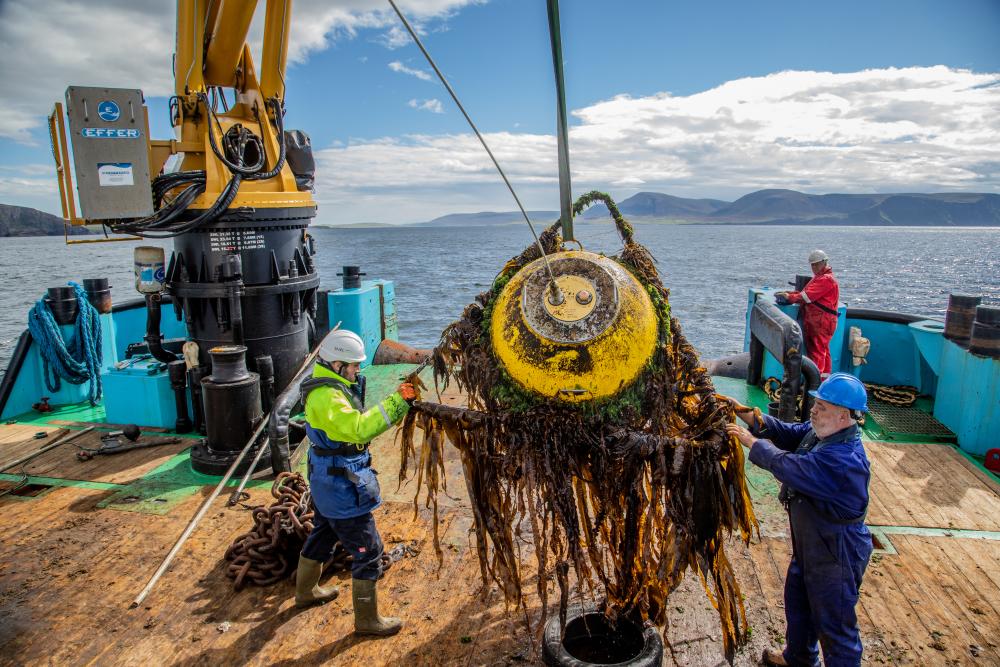
Fouling is the unintended accumulation of organic or inorganic material on or within a marine energy device. If left unaddressed, fouling can negatively impact device hydrodynamics, performance, and survivability, as well as instrumentation. Examples of fouling include the growth of biological communities on wave energy or current energy devices and related infrastructure, mineral build up on the heat exchangers used for ocean thermal energy conversion (OTEC), increased concentrations of compounds that inhibit chemical reactions in salinity gradient applications, and sediment accumulation that can cause damage or limit the performance of internal mechanics. Fouling is not considered corrosion, which is the removal, weakening, or corruption of material (e.g., by seawater).
Photo: European Marine Energy Centre (EMEC)
Marine Energy Documents Related to Fouling
Tethys Engineering is a knowledge hub that contains documents and resources about the technical aspects of marine energy development. The table below contains all of the documents in the Tethys Engineering Knowledge Base associated with Fouling.
Total: 97